"Let’s learn about each Limb of Yoga and how to incorporate them into your practice"
- Yama: Restraints, moral disciplines or moral vows. These are practices that are primarily concerned with the world around us, and our interaction with it (read post ‘What are Yamas and Niyamas?’)
- Niyama: Positive duties or observances, directed towards ourselves. The prefix ‘ni’ is a Sanskrit verb which means ‘inward’ or ‘within’ (read post ‘What are Yamas and Niyamas?’)
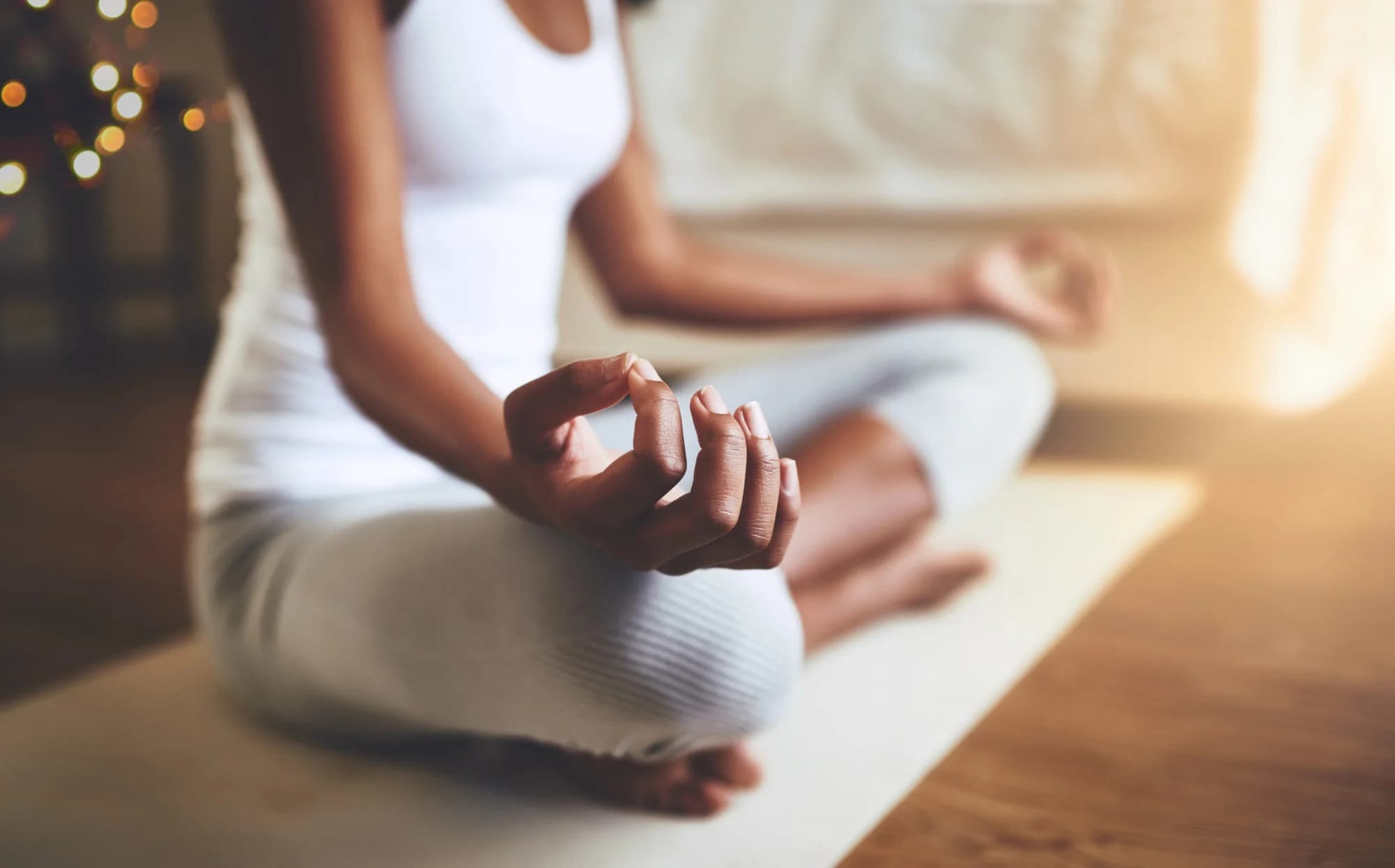
- Asana. Posture. The physical aspect of yoga is the third step on the path to freedom. Asana means ‘seat’ - specifically the seat you would take for the practice of meditation. The only alignment instruction Patanjali gives for this asana is’sthira sukham asanam’, the posture should be steady and comfortable. The idea is to be able to sit in comfort so we’re not ‘pulled’ by aches and pains of the body, or restlessness due to an uncomfortable position.
- Pranayama. Breathing techniques. This can be understood as either ‘prana-yama’ which would mean ‘breath – control’ or ‘breath restraint’, or it could be understood as ‘prana-ayama’ which would translate as ‘freedom of breath’, ‘breath expansion’ or ‘breath liberation’. Each way of breathing will change our state of being, but it’s up to us as to whether we perceive this as ‘controlling’ the way we feel or ‘freeing’ ourselves from the habitual way our mind may usually be.
- Pratyahara. Sense withdrawal. ‘Praty’ameans to ‘withdraw’, ‘draw in’ or ‘draw back’, and the second part ‘ahar’a refers to anything we ‘take in’ by ourselves, such as the various sights, sounds and smells our senses take in continuously.
- Dharana. Focused concentration. ‘Dh’a means ‘holding or maintaining’, and ‘Ana’ means ‘other’ or ‘something else’. In order to focus on something, the senses must withdraw so that all attention is put on that point of concentration, and in order to draw our senses in, we must focus and concentrate with a clear intention.
- Dhyana. Meditative absorption. The moment when we become completely absorbed in the focus of our meditation. The actual practice of meditation is definitely not something we can actively ‘do’, rather it describes the spontaneous action of something that happens as a result of everything else
- Samadhi. Bliss or enlightenment. Breaking the word in half, we see that this final stage is made up of two words; ‘sama’ meaning ‘same’ or ‘equal’, and ‘dhi’ meaning ‘to see’. There’s a reason it’s called realization – and it’s because reaching Samadhi is not about escapism, floating away or being abundantly joyful; it’s about realizing the very life that lies in front of us. After we’ve re-organized our relationships with the outside world and our own inner world, we come to the finale of bliss.