A retreat is a container: the schedule is set, the meals are provided, the other participants are assigned, and the experience is curated in advance by someone else.
A destination is a context. You bring your practice to a place, and the place does something to your practice that would not happen anywhere else—the light, the landscape, the pace, the particular quality of stillness or aliveness that a specific location produces.
The UK has more of these genuine yoga destinations than its reputation for grey weather and busy cities suggests. There is a specific geography of quiet, restoration, and natural beauty scattered across England, Wales, and Scotland that serious practitioners are increasingly choosing as the backdrop for self-directed practice rather than structured retreat.
What makes a destination genuinely yoga-supportive rather than simply scenic? The quality of morning light. The availability of outdoor practice space. The absence of noise that disrupts pranayama and meditation.
Research shows that outdoor physical activities, including yoga, significantly improve mood and reduce stress more effectively than indoor exercises.
Access to walking and movement in nature that extends the practice beyond the mat. The presence of practitioners and teachers in the local community that gives a traveling yogi access to classes and connection rather than isolation.
These are not the top retreats of the UK. It is the places in the UK where the environment itself becomes part of the practice, and where a practitioner can arrive with a mat, a week, and an intention and come back changed by the place as much as by what they did there.
West Sussex and the Weald
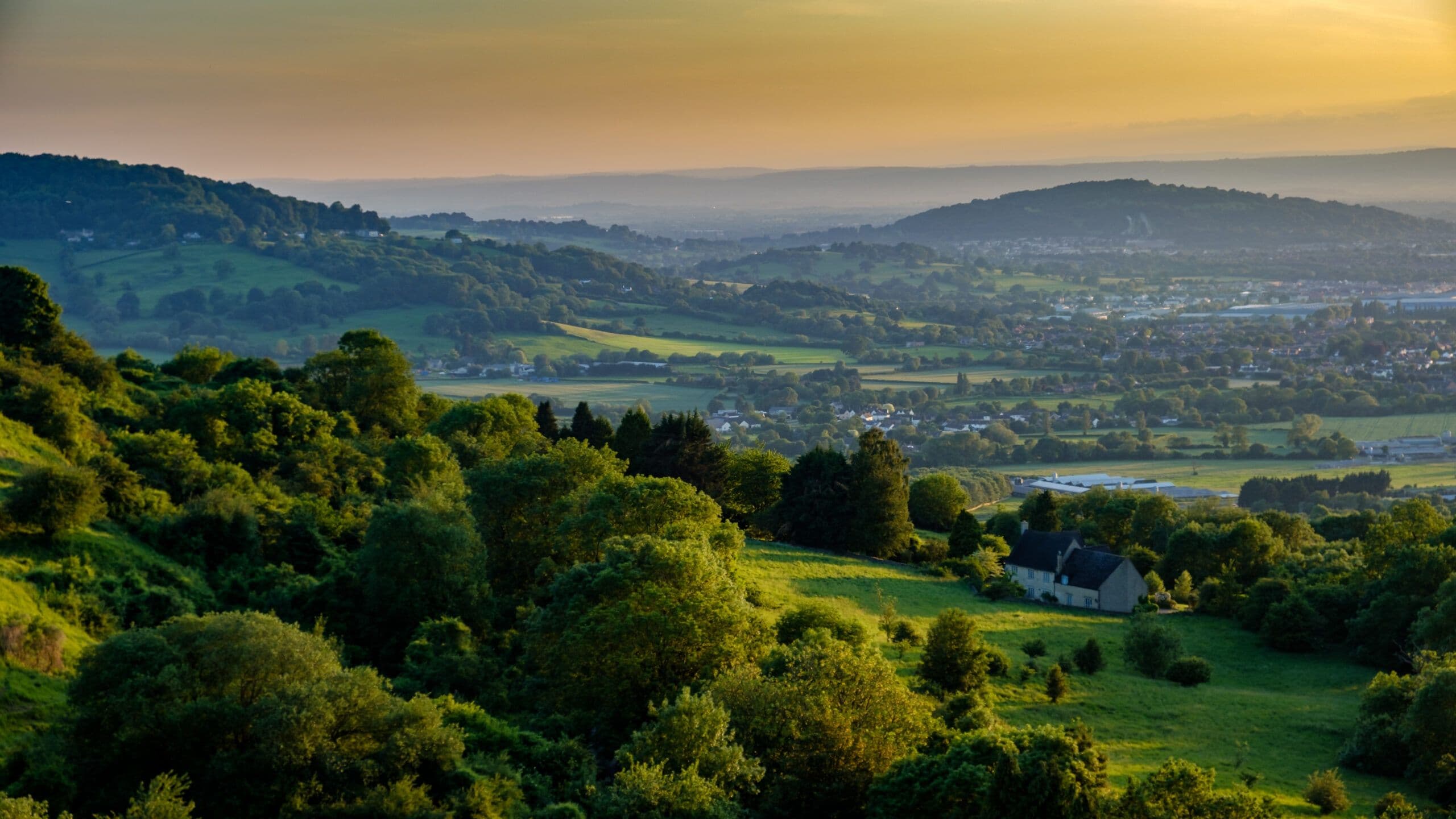
West Sussex and the Weald represent one of the most underestimated quiet destinations in the south of England for practitioners who want countryside access, genuine stillness, and the kind of physical restoration that a serious yoga trip benefits from. The landscape between the South Downs and the High Weald sits within two hours of London.
The Weald landscape offers a yoga traveler the ancient woodland, the rolling agricultural land, the absence of coastal tourist traffic that keeps the area genuinely quiet even in summer. The network of footpaths makes extended walking meditation possible without planning. The specific quality of light and air in the Low Weald feels genuinely restorative to practitioners arriving from urban environments.
Horsham sits as the market town at the center of this area—a town large enough to have good independent food and accommodation options but small enough to maintain the unhurried pace that a yoga trip requires. Serious yoga practitioners traveling for practice benefit from having access to skilled bodywork and spinal care in the destination, particularly for those using the trip as an opportunity to deepen their practice beyond what their regular schedule allows.
Chiropractic care supports yoga practitioners by addressing structural imbalances and bodily restrictions, ensuring that individuals can perform yoga poses with better alignment.
The availability of professional chiropractic, massage, and complementary therapy in the destination matters more for a practice-focused trip than it does for conventional tourism.
Weald Chiropractic in Horsham—a husband and wife chiropractic practice offering chiropractic care, sports massage, acupuncture, and reflexology—represents the kind of integrated physical care resource that makes a self-directed yoga destination trip more sustainable for practitioners who are using the week to practice more intensively than their regular schedule allows.
Yoga practitioners planning a West Sussex destination trip who want access to skilled spinal care and complementary therapy alongside their practice will find this range of services a genuine asset in a destination that is otherwise better known for its walking and its quiet than for its wellness infrastructure.
The Scottish Highlands
The Scottish Highlands offer the destination for practitioners who need the most complete contrast with urban life. The specific quality of Highland stillness goes beyond quietness into a kind of geological scale that puts personal mental noise in perspective.
What Loch Lomond and the Trossachs offer for outdoor practice in the warmer months is the combination of water, mountain, and forest that creates distinct microclimates within a single day's practice. Morning mist rising off lochs changes the quality of breathing exercises in ways a heated studio never replicates.
The particular challenge of Highland weather requires something from a practitioner who is planning outdoor sessions.
Research from the National Center for Complementary and Integrative Health highlights yoga's capacity to improve wellness by alleviating stress, and when practiced outdoors, these benefits are exponentially amplified as natural settings actively reduce cortisol levels.
Rain is not an inconvenience but a teacher about steadiness and adaptability. Wind against skin during standing poses develops proprioception that indoor practice cannot access.
The Highlands teach practitioners what their practice looks like when stripped of all the accommodations modern life provides. The accommodation options range from simple bothies to estate houses, but the real infrastructure is the land itself—miles of terrain where you can move without encountering another soul, where the rhythm of practice syncs not with a teacher's playlist but with weather patterns and daylight hours.
The Brecon Beacons in Wales
The Brecon Beacons serve as the destination for practitioners drawn to the combination of physical landscape and cultural depth.
Bannau Brycheiniog National Park was the first area to be given International Dark Sky Reserve status in Wales, and only the fifth in the world, in 2013. The dark sky designation makes dawn and evening practices extraordinary—savasana under actual visible stars rather than a studio ceiling rewrites what rest means. The walking culture in Wales extends naturally into moving meditation.
The National Park is famous for its vast heather moorland, and in late summer the moors turn vivid shades of purple and pink, while beyond the high moorland, the landscape shifts into green valleys, ancient woodland, and ruined abbeys. Public footpaths crisscross the Beacons in ways that make it possible to walk for hours encountering only sheep and the occasional hiker committed enough to be out in the weather.
The specific Welsh quality of landscape differs from English or Scottish countryside in ways that practitioners tend to feel even if they cannot immediately articulate them. The valleys hold moisture differently. The light changes faster.
The hills feel older. Practitioners report that asana practice in the Beacons has a grounded, rooted quality that Highland practice does not—less about transcendence, more about deep embodiment in earth that has been farmed and walked and lived on for millennia.
The local accommodation ranges from farm stays to country inns, most within reach of genuine hillwalking and many run by people who understand what visiting practitioners need: early breakfast, packed lunch, quiet evenings, and directions to the best sunrise spots.
The North York Moors
The North York Moors represent the destination for practitioners looking for the most complete seasonal immersion. The moor landscape in different seasons does completely different things to a practice.
The North York Moors change noticeably with the seasons—spring brings curlews calling across the moors, summer brings heather bloom, autumn offers woodland color, and winter offers clear views and peaceful trails.
The abbeys and ancient sites give the area a contemplative depth beyond its natural beauty. Rievaulx Abbey, tucked into a wooded valley, creates the kind of space where walking meditation transitions naturally into seated meditation without needing to decide where one ends and the other begins.
The specific walking access makes the Moors one of the best destinations in England for combining mat practice with extended movement in nature. Practitioners staying a week typically develop a rhythm: early asana practice at accommodation, midday walking that extends into several hours, late afternoon restorative work, evening pranayama as light fades. The long walks between villages, many following old drovers' routes or disused railway lines, offer the flat, steady terrain that supports walking meditation better than more dramatic landscapes where attention stays focused on footing.
Villages like Hutton-le-Hole and Goathland offer modest accommodation and access to moorland within minutes of the door.
Recovery practices alongside intensive yoga become essential when practitioners are adding four-hour hill walks to their daily asana practice. The Moors in autumn, when heather fades to rust and bracken turns gold, produce a particular quality of bittersweet beauty that stays with practitioners long after they leave.
The Cotswolds
The Cotswolds represent the destination for practitioners who want the gentle version. Not dramatic landscape but deep countryside quietness, good accommodation, excellent independent food, and the specific English pastoral quality that produces a particular kind of restorative slowness different from the more intense restoration of wilder landscapes.
The limestone villages built in honey-colored stone create visual harmony that does not demand attention the way coastlines or mountains do. This is landscape that supports practice without overwhelming it. Yoga here happens at the pace of a long walk between villages, lunch at a pub garden, afternoon practice in a cottage, evening watching swallows. The quality is cumulative rather than immediate—by day three, practitioners notice they have stopped checking their phones. By day five, they have stopped thinking about what they will do when they get home.
The Cotswolds offer some of the best food access of any UK yoga destination. Farm shops, village bakeries, cheese makers, and market towns with proper greengrocers make it possible to eat extraordinarily well without traveling far. For practitioners interested in nutrition as part of practice, this matters.
Accommodation skews toward country cottages and B&Bs run by people who have lived in the area for decades and can direct you to the footpath that avoids the main road, the field where you can watch hares at dusk, the church with the Norman nave where you can sit in silence for an hour undisturbed.
Planning a Self-Directed Yoga Destination Trip
The preparation for a self-directed trip looks different from preparing for a retreat. Practice intentions matter more than packing lists. What do you want your practice to do this week that it cannot do at home? Do you want to practice longer? Earlier? Outdoors? In silence? With more pranayama and less asana? The answers shape where you go and what you do when you arrive.
Accommodation selection matters. A place with outdoor space accessible early morning. Quiet enough for meditation. Far enough from main roads that traffic noise does not interrupt. Close enough to walking routes that you can leave the door and be on a trail within minutes. The balance between structured practice time and unstructured exploration shifts day by day—some practitioners arrive with a detailed daily schedule and abandon it by day two. Others arrive with no plan and find themselves naturally falling into a rhythm that emerges from the location itself.
What experienced practitioners say about the difference between planning a destination trip around the practice versus planning it around the destination comes down to sequence: destination-first planning starts with "I want to see the Highlands" and adds practice as an element. Practice-first planning starts with "I want to practice outdoors in a landscape that teaches stillness" and finds the Highlands as the answer.
Solo versus partnered versus small group trips each serve different intentions. A solo yoga destination trip offers complete freedom to follow intuition-practice at dawn if that is when the energy arrives, or spend an afternoon reading if practice feels complete. For travelers combining a yoga getaway with a broader holiday, planning the journey in stages can offer a similar sense of balance. The moving days handled separately from a few settled nights in one place can make it easier to maintain a consistent morning practice without constantly adjusting to a new destination.
The challenge is maintaining structure without external accountability.
Partnered trips work when both practitioners have similar rhythms and can navigate the balance between shared and solitary practice. Small group trips, three to five people maximum, create enough community for evening discussion about what the day's practice revealed without becoming a de facto retreat with group dynamics to manage.
What the UK Offers That Nowhere Else Quite Does
The UK's quiet yoga destinations offer something that neither international retreats nor domestic retreat centers quite replicate. The specific combination of accessibility, genuine landscape character, and the absence of a curated container allows a practitioner to discover what their practice does when the only variable is where it is happening.
These are places where you can arrive on a Friday evening, practice Saturday morning in a landscape unchanged for centuries, walk for hours encountering only sheep and stone walls, return to a cottage to practice again as light fades, and wake Sunday to do it all again with the only agenda being attention to what emerges.
The UK is small enough that every destination described here sits within four hours of London by train or car.
This proximity makes week-long practice trips possible for practitioners who cannot take three weeks to travel internationally. It also makes repeat visits feasible—returning to the same landscape in different seasons to discover how practice changes when heather blooms or when winter wind strips leaves from valley trees.
These destinations ask something of practitioners that retreat centers do not. There is no teacher to tell you what practice to do today. No scheduled meals to organize your day. No other participants to create the subtle social pressure that keeps you on the mat when motivation flags. Just you, the place, and the question of what happens when you bring your practice to ground that has its own presence, its own pace, its own way of teaching if you can learn to listen.